Freelancing is how most 3D artists first start earning money from their skills, and for good reason. The path is direct: someone needs 3D work, you do the work, they pay you. There's no infrastructure to build, no audience to grow, no product to create upfront. You trade hours for money and the transaction is clean.
The problem is that freelancing scales badly. You can get better, get faster, raise your rates, but you're still fundamentally capped by the number of hours you can bill. A great freelancer earns more per hour than a mediocre one, but they both stop earning the moment they stop working. Holidays, illness, a slow month between clients, a period where you want to work on your own projects rather than someone else's brief, all of these cost money in a freelance model in a way they don't have to.
The 3D artists who build real financial stability aren't necessarily the ones billing the most hours. They're the ones who figured out how to build income that doesn't require them to be actively working every time a dollar comes in.
This is a guide to those income streams, what they actually look like, how long they take to build, and which ones are realistically accessible depending on where you are in your career.
Understand the Difference Between Active and Passive Income
This distinction matters more in 3D than in most creative fields because 3D skills translate to passive income in unusually direct ways.
Active income requires your ongoing time for each dollar earned. Freelancing is active income. Consulting is active income. Teaching live classes is active income. The work stops and the income stops.
Passive income, or more accurately semi-passive income since almost nothing is completely effortless, is income from work you did once that continues to earn without proportional ongoing effort. A 3D model you built and published two years ago that downloads fifty times this month is earning you money right now without any work being done today.
The goal isn't to eliminate active work entirely. It's to build enough passive income that your active hours become a choice rather than a necessity, and so that the ceiling on your annual income isn't set by how many hours you're willing to bill.
Most of the income streams below sit on the passive or semi-passive end of that spectrum. Building them requires active work upfront. Maintaining them requires some ongoing effort. But the ratio of dollars earned to hours worked improves over time rather than staying flat.
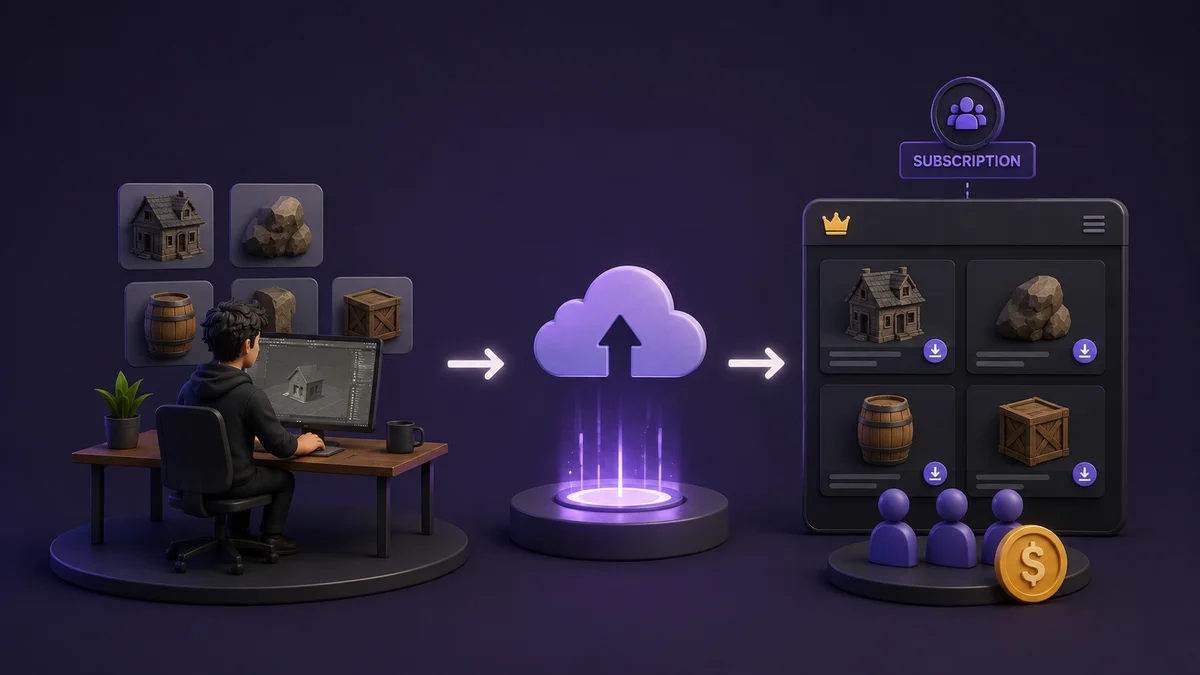
This is the most direct translation of 3D skills into recurring passive income, and for many artists it becomes their primary non-freelance revenue stream.
The model is straightforward. You create 3D assets, publish them on a subscription marketplace, and earn a share of the platform's subscription revenue every month based on how many subscribers download your work. The income is recurring because subscriptions renew monthly. An asset you published a year ago keeps earning as long as people keep downloading it, regardless of whether you've added anything new.
What makes this different from selling assets per-unit on traditional marketplaces is the compounding effect. On a per-sale platform, you earn once per download. On a subscription platform, you earn every month that subscribers keep using your work, and your earnings grow as the platform's subscriber base grows rather than being fixed at the moment of upload.
Korvix3D's payout model takes this further with an effort-weighted system where creator earnings are multiplied by a quality score, a composite of admin quality ratings at 60% and user reviews at 40%. An asset that earns a high quality score generates more income per download than a comparable asset with a lower score, which creates a financial incentive for genuine quality rather than volume.
Practically, this income stream takes six to twelve months to build to meaningful levels. The first few months of uploads earn modestly while the library builds. As the library reaches twenty, thirty, or fifty assets, the cumulative download volume produces income that starts to feel significant. Artists who have built libraries of one hundred or more quality assets on subscription platforms often report monthly earnings that match or exceed their average freelance rates, with the income arriving whether or not they worked that month.
The Korvix3D bridge plugin for Blender, Maya, 3DS Max, Cinema4D, Unity, and Unreal Engine also works in both directions. Creators can browse the library as subscribers and publish assets from inside their software without switching to a browser, setting names, thumbnails, descriptions, tags, and pricing from within the tools they already use.
Start publishing on Korvix3D → https://korvix3d.com/signup?creator=true
Income Stream 2: Selling Assets on Per-Unit Marketplaces
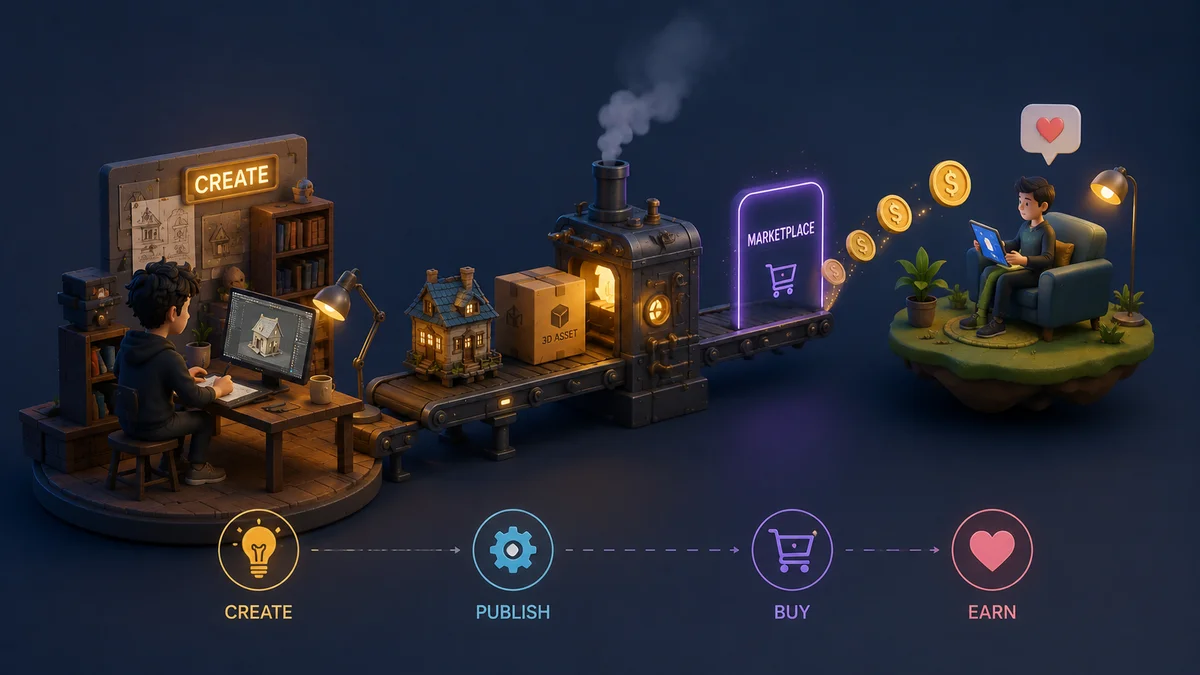
This is different from subscription platforms and worth treating as a separate income stream rather than an alternative to them, because they attract different types of buyers.
Per-unit marketplaces like CGTrader, TurboSquid, and Fab (Epic Games) let buyers purchase specific assets outright at a one-time price. The income is transactional rather than recurring, you earn when something sells rather than continuously, but the ceiling per asset can be higher for very specific or highly specialized assets that a professional is willing to pay a premium for.
The strongest use of per-unit marketplaces is for assets that have a defined, identifiable audience willing to pay for exactly that thing: specific vehicle models, character types with particular rigs, highly specialized architectural elements, or branded product models used in commercial advertising. These aren't the broad-category assets that perform best on subscription platforms. They're the specific assets that a buyer searches for knowing what they need and is willing to pay $80 or $150 for because no substitute will do.
Publishing on both subscription and per-unit platforms simultaneously isn't complicated and makes sense for most creators. Your general- purpose furniture, props, and environment assets go on a subscription platform where broad audiences find and download them continuously. Your specialized, high-complexity, high-effort hero assets go on per- unit platforms where the right buyer pays a significant price for exactly that thing.
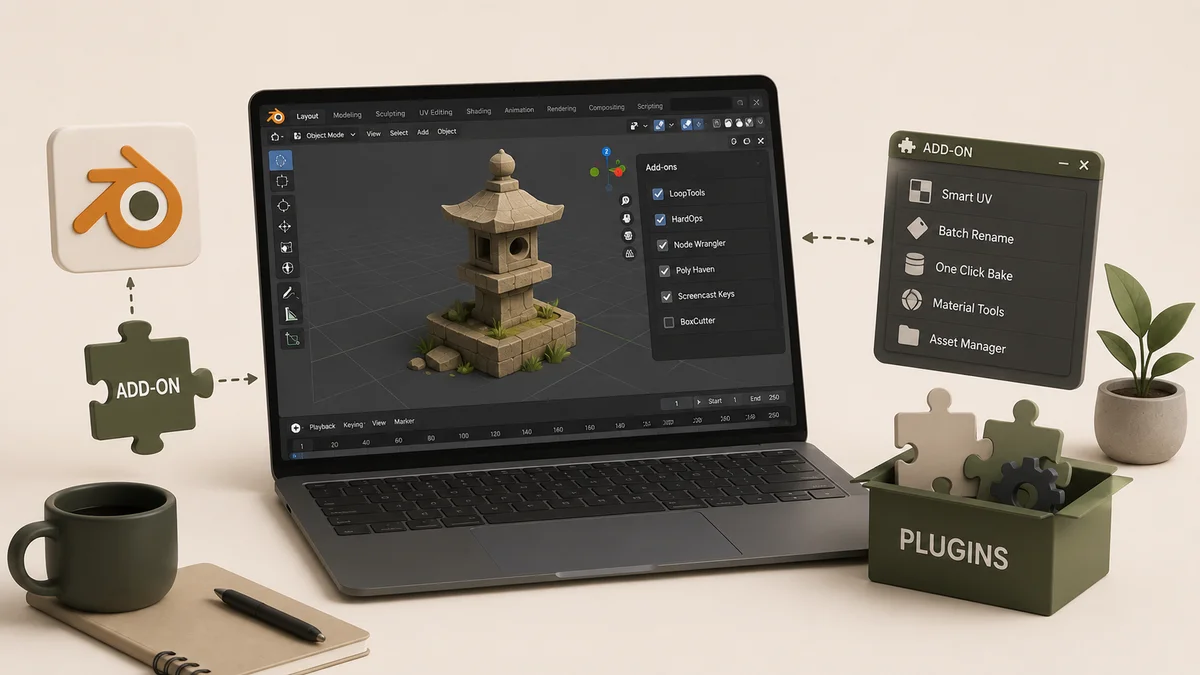
If your skills extend into scripting and tool development, this is one of the highest-margin income streams available to a 3D artist. The market for Blender add-ons in particular has grown substantially as Blender's user base has exploded, and quality tools that solve specific workflow problems command prices from $15 to $150 or more per license.
The market for add-ons rewards niche specificity more than broad utility. An add-on that does one specific thing exceptionally well for a clearly defined audience, a scatter tool for environment artists, a rigging helper for character animators, a batch export tool for game developers, tends to outperform broad multipurpose tools because the audience for a specific tool is easy to find and the value proposition is immediately clear.
Distribution for Blender add-ons typically runs through Blender Market, Gumroad, or direct sales from a personal website. None of these require exclusivity, so selling through multiple channels simultaneously is straightforward.
The upfront work is significant. A well-made add-on requires real programming ability alongside 3D knowledge, and supporting users, maintaining compatibility across Blender versions, and updating for new Blender releases requires ongoing time. But a successful add-on in a good niche can earn for years from the initial development work, with updates that are less intensive than the original build.
Income Stream 4: Online Courses and Tutorials
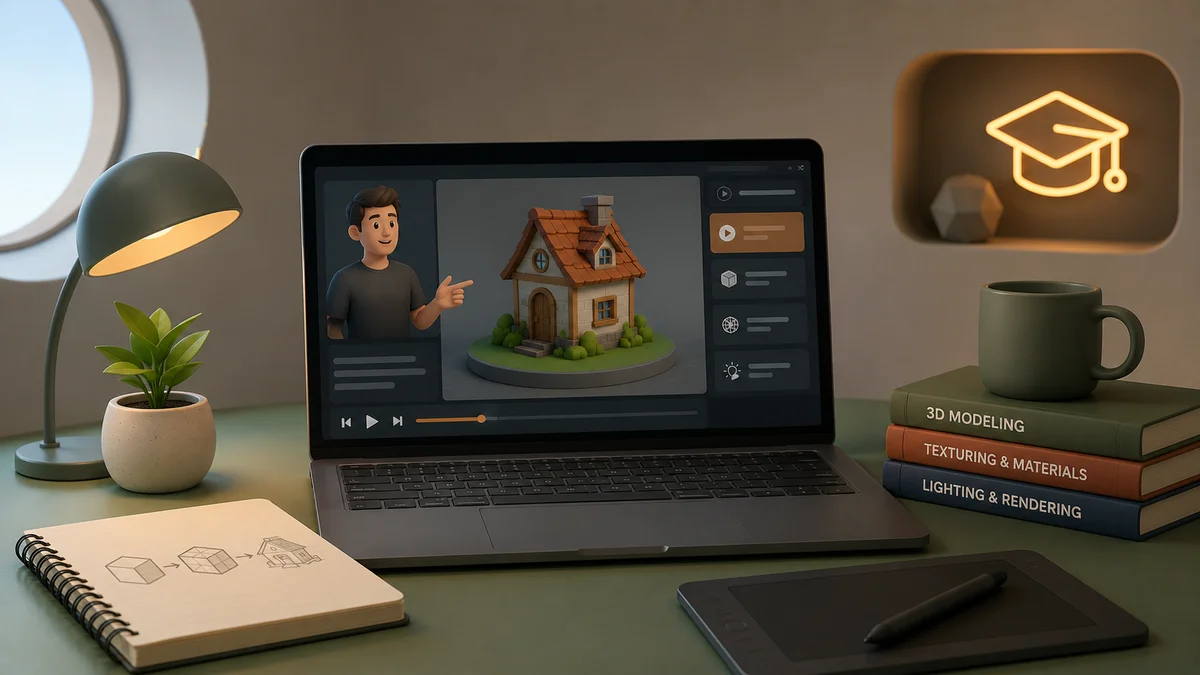
3D skills translate directly into education, and the demand for quality 3D education is large and growing continuously. The barrier most artists face here isn't ability, it's the transition from knowing how to do something to knowing how to teach it clearly and building the audience who will pay to learn.
There are two distinct models worth understanding:
Platform courses, hosted on Udemy, Skillshare, or similar, give you access to an existing audience without needing to build your own. The tradeoff is platform control over pricing and the percentage they take from each sale. For artists without an existing following, this is the faster path to first income from education since you're reaching buyers who are already looking for courses on those platforms.
Self-hosted courses, sold through Gumroad, Teachable, or your own website, give you higher margins and full control over the experience, pricing, and audience relationship. The tradeoff is that you need to build and maintain an audience yourself, typically through a YouTube channel, social media presence, or newsletter, before the self-hosted model generates meaningful income.
Most successful 3D educators combine both: a YouTube channel that grows an audience of learners for free, which then converts to paid course sales either on a platform or directly. The YouTube content is active work, but the courses themselves are semi-passive once recorded.
Income Stream 5: YouTube and Content Creation
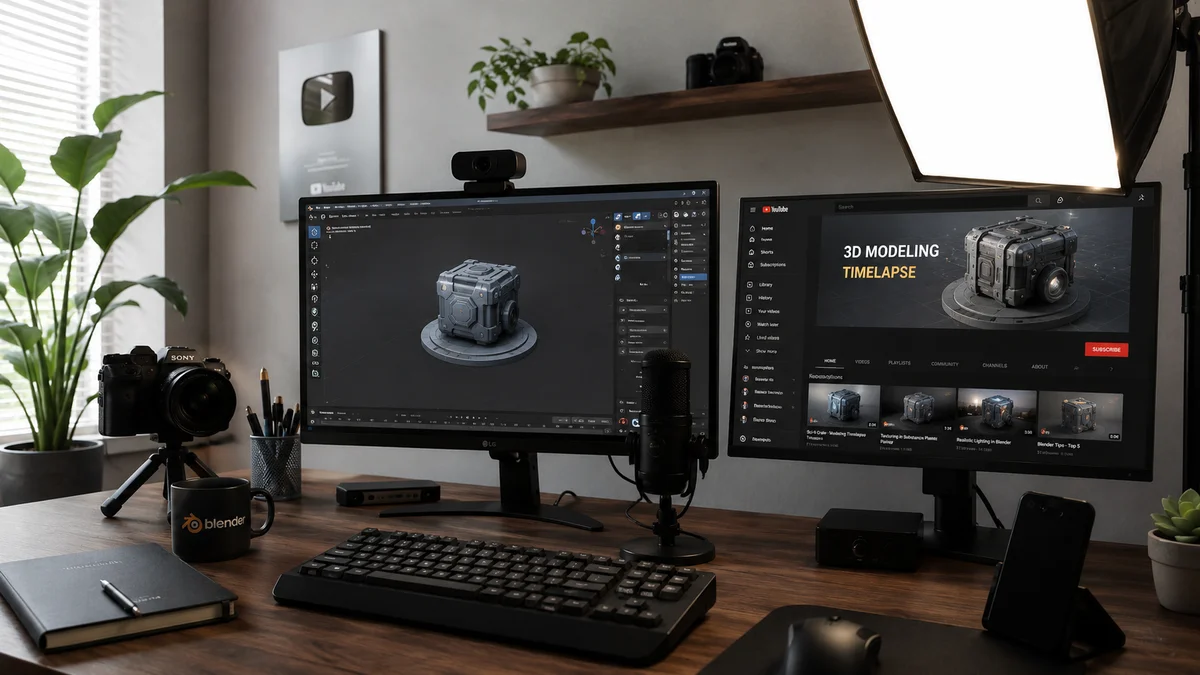
A 3D-focused YouTube channel doesn't require the largest audience to generate meaningful income, because the audience that watches 3D content is engaged, technically interested, and valuable to software companies and tool developers who want to reach them.
YouTube channel income for a 3D creator typically comes from three sources. Ad revenue from YouTube's Partner Program starts modest and scales with views. Sponsorships from relevant software tools, hardware brands, and asset platforms often pay more per video than ad revenue once a channel reaches a few thousand subscribers. And affiliate commissions from tools, plugins, or platforms the creator recommends can add a consistent ongoing revenue layer.
The realistic timeline is longer than most people expect. A 3D YouTube channel that earns meaningfully from multiple sources typically takes one to two years of consistent posting to build to that point. The work is genuinely active while the channel is being built. But a channel with an established subscriber base and back-catalog of views generates income from videos posted years ago, which starts to look more like passive income as the catalog grows.
Income Stream 6: 3D Printing Files
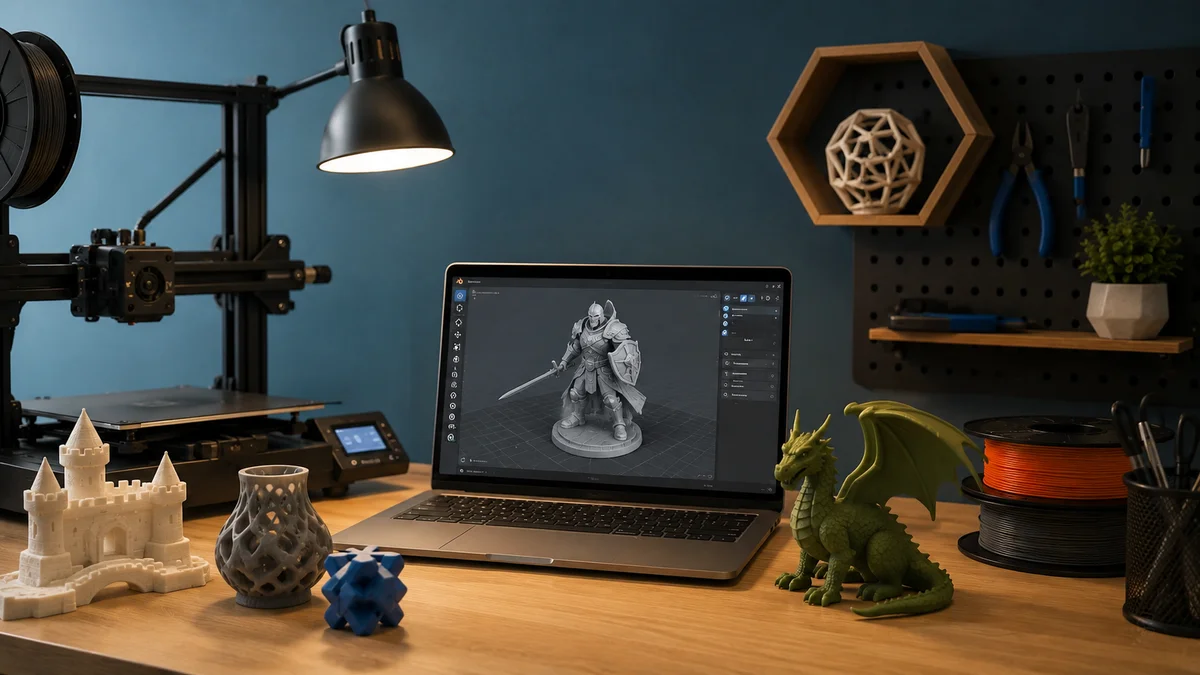
If your modeling work produces designs that work well as physical objects, selling 3D printable files is a distinct market from general 3D asset sales with its own platforms and audience.
Cults3D, MyMiniFactory, and Printables are the main platforms for printable file sales. The audience is makers, hobbyists, tabletop gaming enthusiasts, cosplayers, and anyone who owns a printer and wants to print specific objects. This audience is price-sensitive but large and enthusiastic, and popular designs in the right niches, miniatures for tabletop games, functional household objects, cosplay accessories, sell large volumes at modest per-unit prices.
The skills required overlap significantly with general 3D modeling but add specific requirements around printability: proper wall thickness, support structure considerations, tolerance for fit-together pieces, and often the ability to hollow models for resin printing. Artists who already work with clean hard-surface modeling tend to transition into printable files relatively easily.
Building Multiple Streams Rather Than Choosing One
The income model that works best for most 3D artists who want to move beyond pure freelancing isn't choosing one of these streams and going all in. It's building several streams simultaneously, each serving a different part of the ecosystem, so that the total income becomes more stable than any single source could be.
A realistic multi-stream setup for a mid-career 3D artist might look like: a subscription platform library providing consistent monthly passive income from accumulated assets, one or two per-unit marketplace listings for the specialized assets worth premium pricing, a modest but growing YouTube channel that both builds an audience and generates ad and sponsorship income, and perhaps an online course or two that converts that audience into direct education revenue.
Each stream takes time to build individually. Running multiple streams doesn't require working more hours, it requires allocating existing working hours toward building assets, content, or educational material rather than just client deliverables.
The transition from pure freelancing to a mixed model is rarely immediate. Most artists start building a passive income stream while still freelancing, treating the asset uploads or YouTube videos as a side activity. Over months and years, as the passive streams grow, the pressure to fill every hour with billable freelance work decreases. The financial cushion that comes from income that doesn't require active work changes what kind of freelance work you're willing to take, what you're willing to charge, and ultimately whether you need to freelance at all.
Where to Start if You're Building From Zero
If you're starting from nothing and want to build a first non-freelance income stream, asset sales on a subscription platform is the most accessible entry point for most 3D artists because:
It uses skills you already have directly. There's no new skill set to acquire, no audience to build first, no upfront investment in software or equipment beyond what you already use for 3D work.
The feedback loop is relatively fast. Your first uploads start earning within weeks, which gives you actual data about what the market responds to before you've committed enormous time to the strategy.
The work compounds. Each asset you add to the library increases the total earning potential. A library of fifty assets earns more than a library of ten without the per-asset income necessarily changing.
Start building your creator library on Korvix3D →https://korvix3d.com/signup?creator=true
See how the payout system works →https://korvix3d.com/docs/payouts
Frequently Asked Questions
How long does it take to earn meaningful money from selling 3D assets? Most creators see modest earnings within the first one to three months of publishing. Earnings that feel meaningful, comparable to a part-time income source, typically take six to twelve months of consistent publishing to reach. The timeline depends heavily on the quality and demand for the assets being uploaded and how actively the creator engages with the platform's community and discovery features.
Do I need a large social media following to earn from 3D assets? No. Asset sales on subscription and per-unit platforms are driven by search and browse behavior within the platform rather than external social media following. A creator with zero social following can build a successful asset library purely on the quality and relevance of what they publish. A following helps with discoverability and can drive external traffic, but it's not a prerequisite.
Can I earn from 3D assets while still freelancing? Yes, and this is actually how most artists build it. Publishing assets doesn't require stopping freelance work. The two income streams are complementary: freelance work pays the bills while the asset library builds, and eventually the asset income reduces how much freelancing you need to do. Many artists maintain both indefinitely because they serve different creative needs as well as financial ones.
What kinds of 3D assets sell best on subscription platforms? High-demand everyday categories perform consistently: furniture and interior props, vehicles, architectural elements, nature and vegetation, and character assets. Assets in categories with broad audience demand accumulate downloads over time and generate the most reliable recurring income. Very niche or highly specialized assets often perform better on per-unit marketplaces where buyers search for exactly that thing and are willing to pay a premium.
Is it worth selling on multiple platforms simultaneously? Generally yes, as long as the platforms don't require exclusivity. A subscription platform and one or two per-unit marketplaces serve different buyer types and can coexist without cannibalizing each other. Managing multiple platform listings requires some ongoing administrative time but typically produces more total income than any single platform.
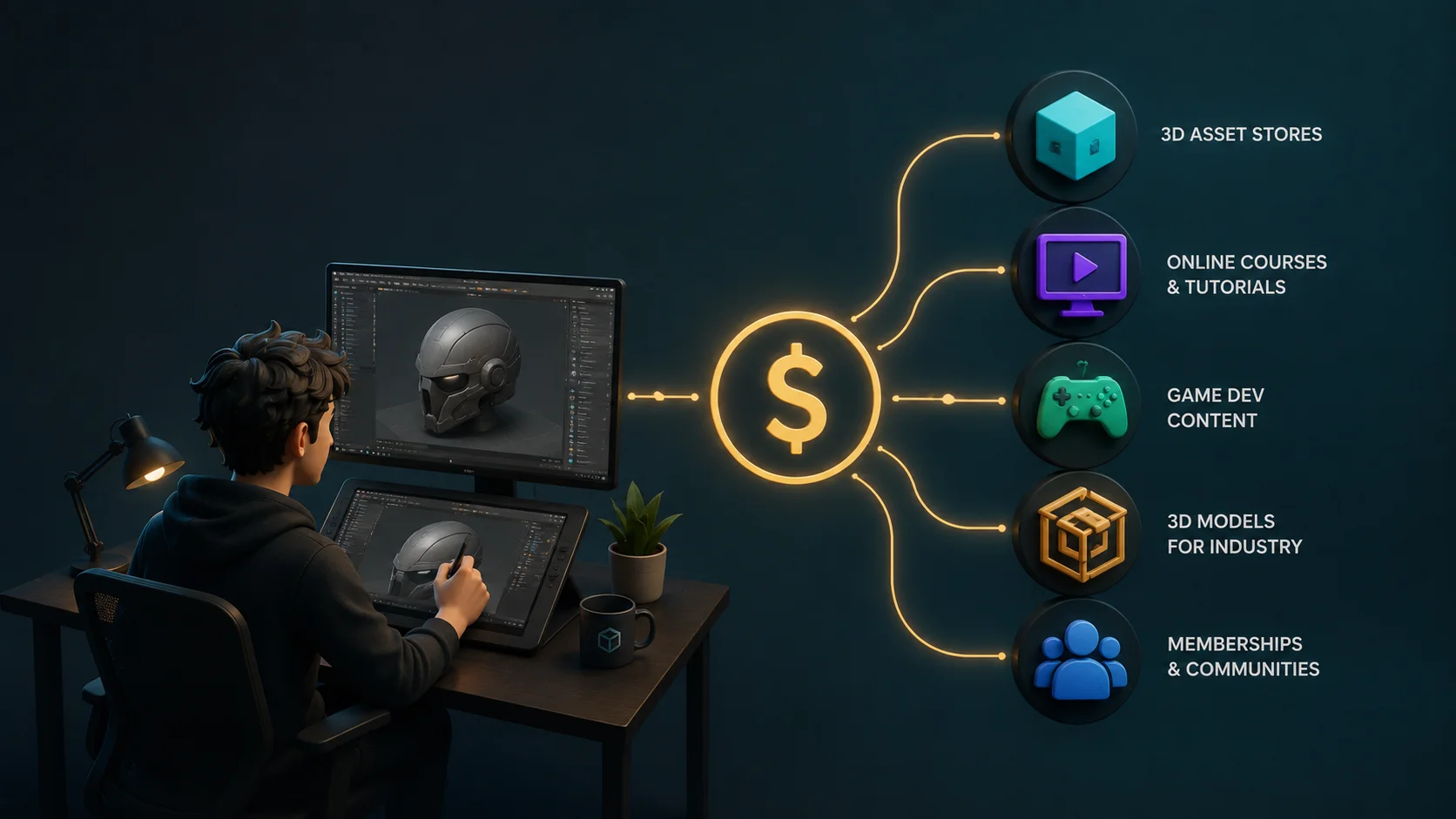


Freelancing is how most 3D artists first start earning money from their skills, and for good reason. The path is direct: someone needs 3D work, you do the work, they pay you. There's no infrastructure to build, no audience to grow, no product to create upfront. You trade hours for money and the transaction is clean.
The problem is that freelancing scales badly. You can get better, get faster, raise your rates, but you're still fundamentally capped by the number of hours you can bill. A great freelancer earns more per hour than a mediocre one, but they both stop earning the moment they stop working. Holidays, illness, a slow month between clients, a period where you want to work on your own projects rather than someone else's brief, all of these cost money in a freelance model in a way they don't have to.
The 3D artists who build real financial stability aren't necessarily the ones billing the most hours. They're the ones who figured out how to build income that doesn't require them to be actively working every time a dollar comes in.
This is a guide to those income streams, what they actually look like, how long they take to build, and which ones are realistically accessible depending on where you are in your career.
Understand the Difference Between Active and Passive Income
This distinction matters more in 3D than in most creative fields because 3D skills translate to passive income in unusually direct ways.
Active income requires your ongoing time for each dollar earned. Freelancing is active income. Consulting is active income. Teaching live classes is active income. The work stops and the income stops.
Passive income, or more accurately semi-passive income since almost nothing is completely effortless, is income from work you did once that continues to earn without proportional ongoing effort. A 3D model you built and published two years ago that downloads fifty times this month is earning you money right now without any work being done today.
The goal isn't to eliminate active work entirely. It's to build enough passive income that your active hours become a choice rather than a necessity, and so that the ceiling on your annual income isn't set by how many hours you're willing to bill.
Most of the income streams below sit on the passive or semi-passive end of that spectrum. Building them requires active work upfront. Maintaining them requires some ongoing effort. But the ratio of dollars earned to hours worked improves over time rather than staying flat.
Income Stream 1: Selling 3D Assets on Subscription Platforms
This is the most direct translation of 3D skills into recurring passive income, and for many artists it becomes their primary non-freelance revenue stream.
The model is straightforward. You create 3D assets, publish them on a subscription marketplace, and earn a share of the platform's subscription revenue every month based on how many subscribers download your work. The income is recurring because subscriptions renew monthly. An asset you published a year ago keeps earning as long as people keep downloading it, regardless of whether you've added anything new.
What makes this different from selling assets per-unit on traditional marketplaces is the compounding effect. On a per-sale platform, you earn once per download. On a subscription platform, you earn every month that subscribers keep using your work, and your earnings grow as the platform's subscriber base grows rather than being fixed at the moment of upload.
Korvix3D's payout model takes this further with an effort-weighted system where creator earnings are multiplied by a quality score, a composite of admin quality ratings at 60% and user reviews at 40%. An asset that earns a high quality score generates more income per download than a comparable asset with a lower score, which creates a financial incentive for genuine quality rather than volume.
Practically, this income stream takes six to twelve months to build to meaningful levels. The first few months of uploads earn modestly while the library builds. As the library reaches twenty, thirty, or fifty assets, the cumulative download volume produces income that starts to feel significant. Artists who have built libraries of one hundred or more quality assets on subscription platforms often report monthly earnings that match or exceed their average freelance rates, with the income arriving whether or not they worked that month.
The Korvix3D bridge plugin for Blender, Maya, 3DS Max, Cinema4D, Unity, and Unreal Engine also works in both directions. Creators can browse the library as subscribers and publish assets from inside their software without switching to a browser, setting names, thumbnails, descriptions, tags, and pricing from within the tools they already use.
Start publishing on Korvix3D → https://korvix3d.com/signup?creator=true
Income Stream 2: Selling Assets on Per-Unit Marketplaces
This is different from subscription platforms and worth treating as a separate income stream rather than an alternative to them, because they attract different types of buyers.
Per-unit marketplaces like CGTrader, TurboSquid, and Fab (Epic Games) let buyers purchase specific assets outright at a one-time price. The income is transactional rather than recurring, you earn when something sells rather than continuously, but the ceiling per asset can be higher for very specific or highly specialized assets that a professional is willing to pay a premium for.
The strongest use of per-unit marketplaces is for assets that have a defined, identifiable audience willing to pay for exactly that thing: specific vehicle models, character types with particular rigs, highly specialized architectural elements, or branded product models used in commercial advertising. These aren't the broad-category assets that perform best on subscription platforms. They're the specific assets that a buyer searches for knowing what they need and is willing to pay $80 or $150 for because no substitute will do.
Publishing on both subscription and per-unit platforms simultaneously isn't complicated and makes sense for most creators. Your general- purpose furniture, props, and environment assets go on a subscription platform where broad audiences find and download them continuously. Your specialized, high-complexity, high-effort hero assets go on per- unit platforms where the right buyer pays a significant price for exactly that thing.
Income Stream 3: Blender Add-ons and DCC Tool Plugins
If your skills extend into scripting and tool development, this is one of the highest-margin income streams available to a 3D artist. The market for Blender add-ons in particular has grown substantially as Blender's user base has exploded, and quality tools that solve specific workflow problems command prices from $15 to $150 or more per license.
The market for add-ons rewards niche specificity more than broad utility. An add-on that does one specific thing exceptionally well for a clearly defined audience, a scatter tool for environment artists, a rigging helper for character animators, a batch export tool for game developers, tends to outperform broad multipurpose tools because the audience for a specific tool is easy to find and the value proposition is immediately clear.
Distribution for Blender add-ons typically runs through Blender Market, Gumroad, or direct sales from a personal website. None of these require exclusivity, so selling through multiple channels simultaneously is straightforward.
The upfront work is significant. A well-made add-on requires real programming ability alongside 3D knowledge, and supporting users, maintaining compatibility across Blender versions, and updating for new Blender releases requires ongoing time. But a successful add-on in a good niche can earn for years from the initial development work, with updates that are less intensive than the original build.
Income Stream 4: Online Courses and Tutorials
3D skills translate directly into education, and the demand for quality 3D education is large and growing continuously. The barrier most artists face here isn't ability, it's the transition from knowing how to do something to knowing how to teach it clearly and building the audience who will pay to learn.
There are two distinct models worth understanding:
Platform courses, hosted on Udemy, Skillshare, or similar, give you access to an existing audience without needing to build your own. The tradeoff is platform control over pricing and the percentage they take from each sale. For artists without an existing following, this is the faster path to first income from education since you're reaching buyers who are already looking for courses on those platforms.
Self-hosted courses, sold through Gumroad, Teachable, or your own website, give you higher margins and full control over the experience, pricing, and audience relationship. The tradeoff is that you need to build and maintain an audience yourself, typically through a YouTube channel, social media presence, or newsletter, before the self-hosted model generates meaningful income.
Most successful 3D educators combine both: a YouTube channel that grows an audience of learners for free, which then converts to paid course sales either on a platform or directly. The YouTube content is active work, but the courses themselves are semi-passive once recorded.
Income Stream 5: YouTube and Content Creation
A 3D-focused YouTube channel doesn't require the largest audience to generate meaningful income, because the audience that watches 3D content is engaged, technically interested, and valuable to software companies and tool developers who want to reach them.
YouTube channel income for a 3D creator typically comes from three sources. Ad revenue from YouTube's Partner Program starts modest and scales with views. Sponsorships from relevant software tools, hardware brands, and asset platforms often pay more per video than ad revenue once a channel reaches a few thousand subscribers. And affiliate commissions from tools, plugins, or platforms the creator recommends can add a consistent ongoing revenue layer.
The realistic timeline is longer than most people expect. A 3D YouTube channel that earns meaningfully from multiple sources typically takes one to two years of consistent posting to build to that point. The work is genuinely active while the channel is being built. But a channel with an established subscriber base and back-catalog of views generates income from videos posted years ago, which starts to look more like passive income as the catalog grows.
Income Stream 6: 3D Printing Files
If your modeling work produces designs that work well as physical objects, selling 3D printable files is a distinct market from general 3D asset sales with its own platforms and audience.
Cults3D, MyMiniFactory, and Printables are the main platforms for printable file sales. The audience is makers, hobbyists, tabletop gaming enthusiasts, cosplayers, and anyone who owns a printer and wants to print specific objects. This audience is price-sensitive but large and enthusiastic, and popular designs in the right niches, miniatures for tabletop games, functional household objects, cosplay accessories, sell large volumes at modest per-unit prices.
The skills required overlap significantly with general 3D modeling but add specific requirements around printability: proper wall thickness, support structure considerations, tolerance for fit-together pieces, and often the ability to hollow models for resin printing. Artists who already work with clean hard-surface modeling tend to transition into printable files relatively easily.
Building Multiple Streams Rather Than Choosing One
The income model that works best for most 3D artists who want to move beyond pure freelancing isn't choosing one of these streams and going all in. It's building several streams simultaneously, each serving a different part of the ecosystem, so that the total income becomes more stable than any single source could be.
A realistic multi-stream setup for a mid-career 3D artist might look like: a subscription platform library providing consistent monthly passive income from accumulated assets, one or two per-unit marketplace listings for the specialized assets worth premium pricing, a modest but growing YouTube channel that both builds an audience and generates ad and sponsorship income, and perhaps an online course or two that converts that audience into direct education revenue.
Each stream takes time to build individually. Running multiple streams doesn't require working more hours, it requires allocating existing working hours toward building assets, content, or educational material rather than just client deliverables.
The transition from pure freelancing to a mixed model is rarely immediate. Most artists start building a passive income stream while still freelancing, treating the asset uploads or YouTube videos as a side activity. Over months and years, as the passive streams grow, the pressure to fill every hour with billable freelance work decreases. The financial cushion that comes from income that doesn't require active work changes what kind of freelance work you're willing to take, what you're willing to charge, and ultimately whether you need to freelance at all.
Where to Start if You're Building From Zero
If you're starting from nothing and want to build a first non-freelance income stream, asset sales on a subscription platform is the most accessible entry point for most 3D artists because:
It uses skills you already have directly. There's no new skill set to acquire, no audience to build first, no upfront investment in software or equipment beyond what you already use for 3D work.
The feedback loop is relatively fast. Your first uploads start earning within weeks, which gives you actual data about what the market responds to before you've committed enormous time to the strategy.
The work compounds. Each asset you add to the library increases the total earning potential. A library of fifty assets earns more than a library of ten without the per-asset income necessarily changing.
Start building your creator library on Korvix3D →https://korvix3d.com/signup?creator=true
See how the payout system works →https://korvix3d.com/docs/payouts
Frequently Asked Questions
How long does it take to earn meaningful money from selling 3D assets? Most creators see modest earnings within the first one to three months of publishing. Earnings that feel meaningful, comparable to a part-time income source, typically take six to twelve months of consistent publishing to reach. The timeline depends heavily on the quality and demand for the assets being uploaded and how actively the creator engages with the platform's community and discovery features.
Do I need a large social media following to earn from 3D assets? No. Asset sales on subscription and per-unit platforms are driven by search and browse behavior within the platform rather than external social media following. A creator with zero social following can build a successful asset library purely on the quality and relevance of what they publish. A following helps with discoverability and can drive external traffic, but it's not a prerequisite.
Can I earn from 3D assets while still freelancing? Yes, and this is actually how most artists build it. Publishing assets doesn't require stopping freelance work. The two income streams are complementary: freelance work pays the bills while the asset library builds, and eventually the asset income reduces how much freelancing you need to do. Many artists maintain both indefinitely because they serve different creative needs as well as financial ones.
What kinds of 3D assets sell best on subscription platforms? High-demand everyday categories perform consistently: furniture and interior props, vehicles, architectural elements, nature and vegetation, and character assets. Assets in categories with broad audience demand accumulate downloads over time and generate the most reliable recurring income. Very niche or highly specialized assets often perform better on per-unit marketplaces where buyers search for exactly that thing and are willing to pay a premium.
Is it worth selling on multiple platforms simultaneously? Generally yes, as long as the platforms don't require exclusivity. A subscription platform and one or two per-unit marketplaces serve different buyer types and can coexist without cannibalizing each other. Managing multiple platform listings requires some ongoing administrative time but typically produces more total income than any single platform.